


Patient Overview
A 59-year-old African American male presented with a medical history including seizure disorder, osteomyelitis, leukocytosis, protein-calorie malnutrition.
Presentation
The patient exhibited a chronic, non-healing Stage 4 pressure injury of the sacral region, initially developing in April 2025. At the time of evaluation, the wound had been present for 7 weeks duration.
Failed Standard of Care
The wound was managed with standard of care including selective sharp debridement’s, medihoney, calcium alginate, and boarded foam dressing. Despite more than four weeks of standard of care management, the wound failed to progress toward healing. Given the lack of response to standard of care, the patient was determined to be an appropriate candidate for advanced wound therapy using DermaBind full-thickness placental membrane.
Treatments
The wound bed was thoroughly cleansed with a wound cleanser. A full-thickness DermaBind placental membrane allograft was applied, ensuring complete contact with the underlying tissue. The graft was then covered with a silicone contact layer and secured using steri-strips and covered with Xeroform. A bordered foam dressing was placed to protect the site and maintain an optimal environment. Average time between visits was 8 days.
Findings
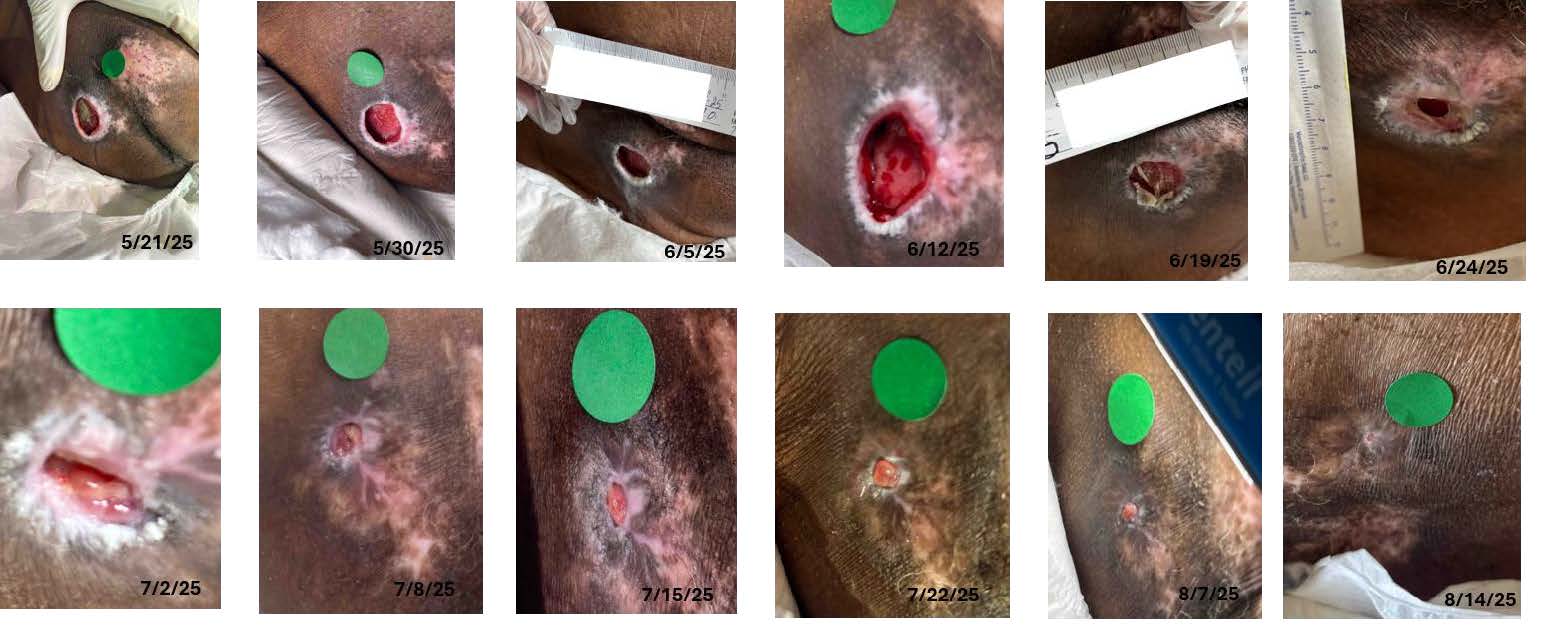
The patient received a total of seven DermaBind applications at weekly appointments. Following clinical reassessment at week eight, the provider discontinued DermaBind and transitioned the patient to standard of care consisting of medihoney and a bordered foam dressing. After three weeks of standard care, at week eleven, the provider documented 100% re-epithelialization.
This case demonstrates the importance of ongoing clinical assessment and provider judgment in the management of advanced wound therapies. Throughout treatment, the provider monitored the wound’s progression closely and discontinued DermaBind when it was no longer clinically indicated. The decision to cease graft application at week eight reflects responsible utilization of advanced biologics and adherence to evidence-based practice, particularly relevant given the heightened industry focus on appropriate use of skin substitutes. The wound achieved a 91.4% reduction in surface area during the DermaBind treatment period.
Rather than continuing graft applications without clear clinical benefit, the provider transitioned the patient to standard of care with medihoney and a bordered foam dressing. This shift underscores the provider’s commitment to selecting the most appropriate therapy at each stage of healing, avoiding over utilization, and ensuring that treatment decisions remained aligned with the wound’s clinical presentation. The subsequent achievement of 100% re-epithelialization by week eleven further supports the appropriateness of this management pathway.

Before & After Wound Images
Ethical approval and patient consent
Institutional Review Board approval was not required for this one patient case as patient had already been treated by their provider with DermaBind based on medical necessity and failed conservative treatment. Patient consent was obtained by their provider for the use and release of deidentified data, and publication of photographs/images.
References
Mendivil, J., McMahon, A. E., Ojelade, O. T., Hobson, K., Marballie, M., Alvarez, S., Adu-Aboagye, V., Chiamba, G., Gowdie, D., Landrum, W. E. II, Alzindani, A., Yazdani, H., Petty, G., Simard, M.-C., Schmid, D., & Meadors, J. (2025). Clinical use of DermaBind TL/FM as a wound covering for hard-to-heal wounds of various aetiologies: A case series. Journal of Wound Care, 34(11).
Provider Information
Provider Name: Oludayo Toby Ojelade, NP