

Patient Overview
The patient is a 72-year-old female with a history of hypertension and mild obesity who was admitted to the hospital in December 2024 with pain and swelling of the right thigh and was diagnosed with necrotizing fasciitis. She underwent extensive surgical exploration and debridement, with myonecrosis of the quadriceps muscle identified; wound cultures grew Clostridium septicum. Her hospital course was prolonged, requiring multiple returns to the operating room for debridement, ICU admission for septic shock with vasopressor support, broad-spectrum antibiotics, and anticoagulation for a right lower leg deep vein thrombosis. She was discharged in January 2025 on four weeks of oral antibiotics to a skilled nursing facility and later transitioned to home care with in-home wound care.
Her medications include gabapentin, topical triamcinolone, methocarbamol, apixaban (Eliquis), and a daily multivitamin with folic acid. She has no known drug allergies and denies alcohol use.
Presentation
The patient presented with a large, full-thickness, non-pressure, surgical wound of the right upper thigh with exposed granulation tissue and mild serosanguineous exudate, no necrosis, and no signs of infection. She reported no wound pain but described limitations in daily activities. An arterial Doppler was ordered to rule out arterial insufficiency prior to graft application. Testing was within range and acceptable.
Failed Standard of Care
The wound had been present for approximately six months, since the patient’s surgical debridement for necrotizing fasciitis in December 2024. For more than three months, it was managed with negative pressure wound therapy, wound clinic and surgical clinic visits, skin barrier cream, hydrogel, medihoney, calcium alginate packing and daily wet-to-dry dressings along with nutritional support. Despite these interventions, the wound remained open and did not progress towards healing. Its course waxed and waned, with periods of improvement followed by regression. Given the wound’s chronicity, large size, full-thickness depth, history of regression, and the risks the provider determined that advanced wound therapy with DermaBind FM was medically necessary.
Treatments
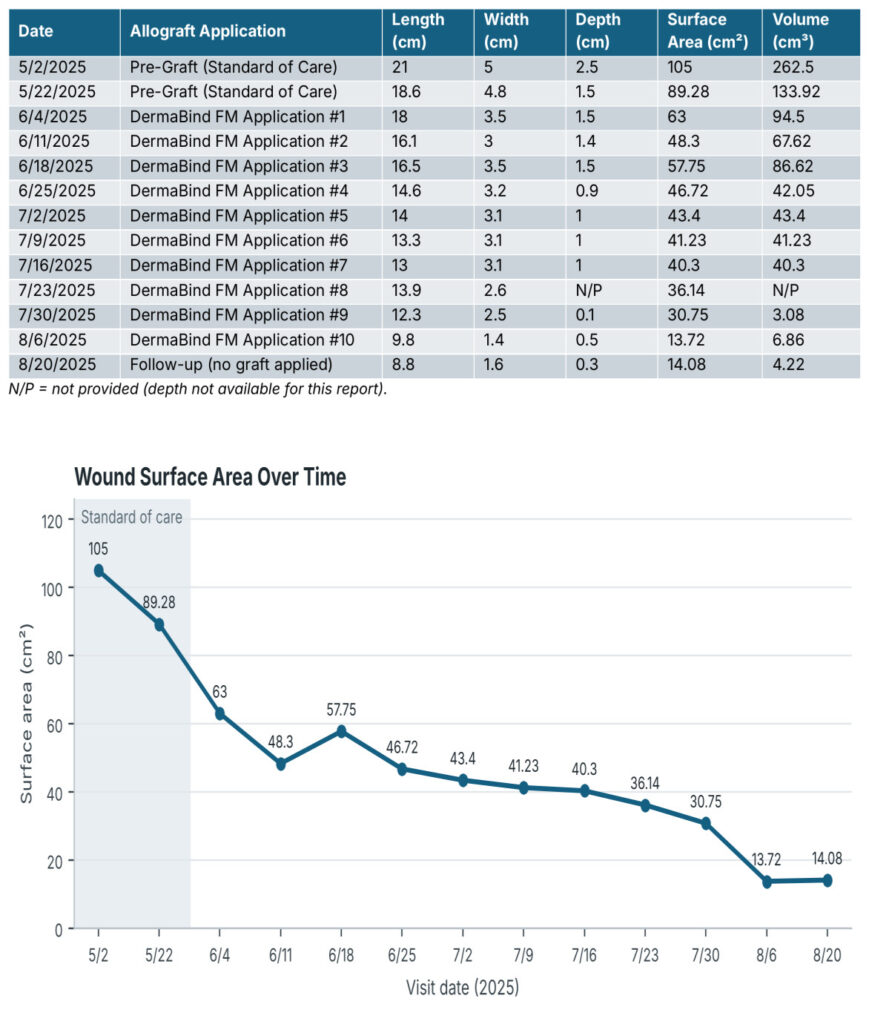
Using aseptic technique, the wound was cleansed with saline. DermaBind FM was applied to the wound bed. The graft was covered with a Mepitel non-adherent contact layer secured with Steri-Strips, followed by an ABD. Applications were performed weekly, for a total of ten applications from 6/4/2025 through 8/6/2025. At the 8th, 9th, and 10th applications, the provider added Wound Heal Gel to the wound bed with the graft for additional rehydration. No complications or adverse reactions were noted.
Findings
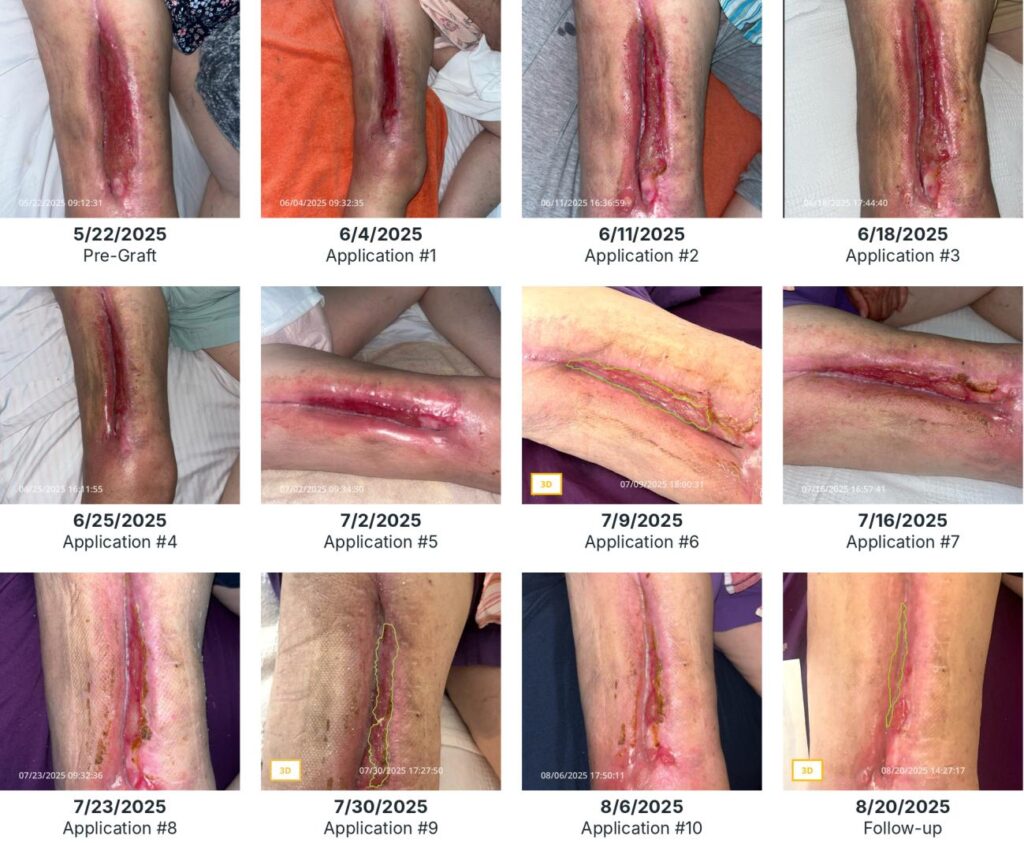
DermaBind FM (Prior to Wound Heal Gel): Wound Heal Gel was not introduced until the 8th application. From the first application on 6/4/2025 to the 8th application on 7/23/2025, the wound showed a documented 43% surface area reduction (SAR). Throughout this period, the wound bed remained clean with healthy red granulation tissue, no necrosis, and no signs of infection, and the wound edges contracted progressively as reported by the provider.
Overall Documented Findings: At the 8/20/2025 follow-up visit, 2 weeks after the final application, the wound showed a 78% SAR from the first application on 6/4/25. Following completion of DermaBind FM therapy, the provider continued standard of care.
Before & After Wound Images
Ethical approval and patient consent
Institutional Review Board approval was not required for this one patient case as patient had already been treated by their provider with DermaBind based on medical necessity and failed conservative treatment. Patient consent was obtained by their provider for the use and release of deidentified data, and publication of photographs/images.
References
Mendivil, J., McMahon, A. E., Ojelade, O. T., Hobson, K., Marballie, M., Alvarez, S., Adu-Aboagye, V., Chiamba, G., Gowdie, D., Landrum, W. E. II, Alzindani, A., Yazdani, H., Petty, G., Simard, M.-C., Schmid, D., & Meadors, J. (2025). Clinical use of DermaBind TL/FM as a wound covering for hard-to-heal wounds of various aetiologies: A case series. Journal of Wound Care, 34(11). https://doi.org/10.12968/jowc.2025.0448
Provider Information
Provider Name: Ahlam Alzindani, NP